
Roots, Rivers, and the Shapes That Return
Every artist develops a language of shapes, motifs, and symbols. Here’s a look at mine, and how it has evolved over the years.
First Drawings and the Language of Birds
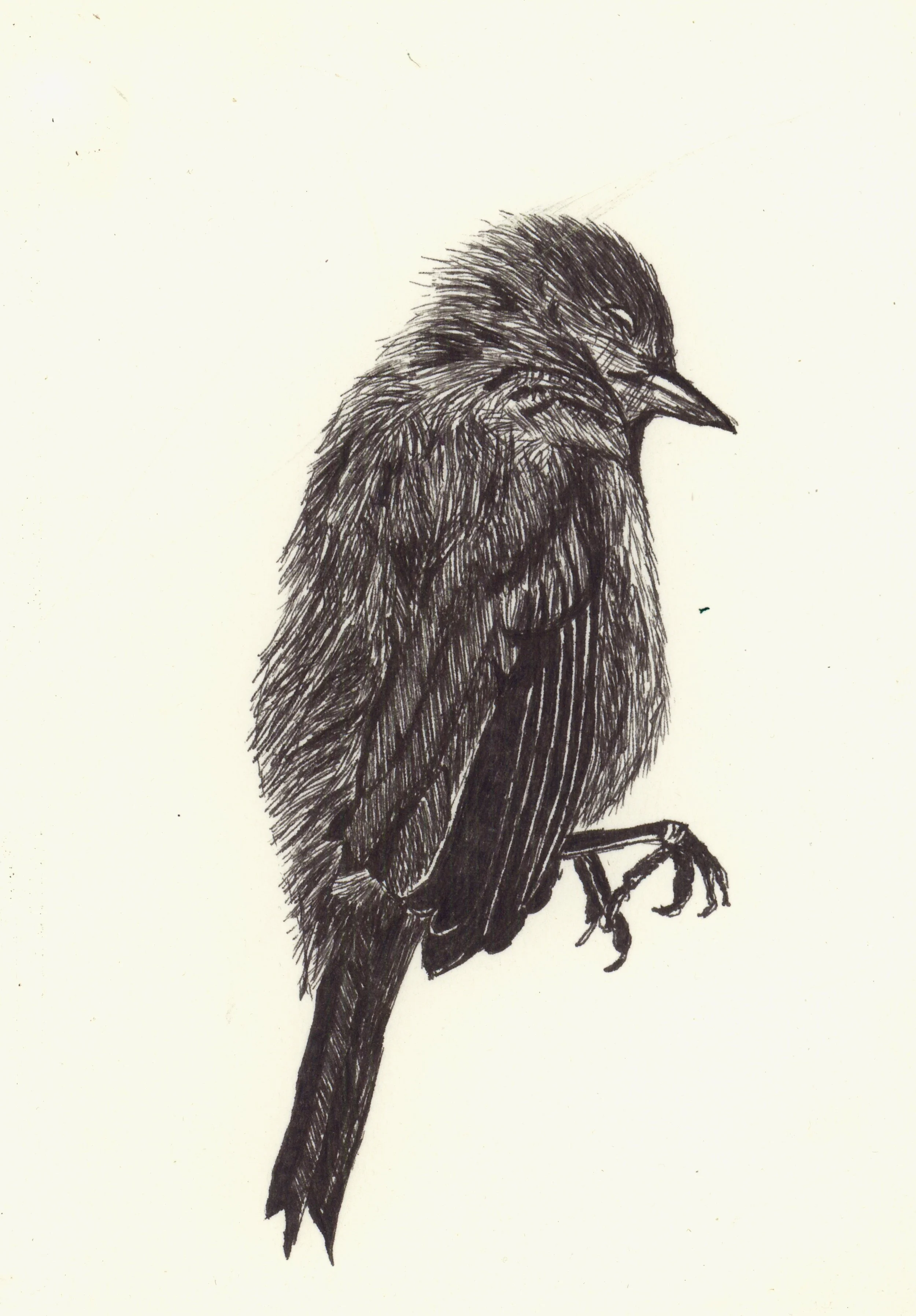
I remember the first time I felt any sort of confidence in my drawing skills. I was probably around 26, and halfway through a Studio Art degree. We had an assignment in my drawing class, the details of which have slipped away with time. While looking for a reference image on the great wide web, I came across a scientific photograph of a group of dead birds, arranged in a neat line and carefully catalogued. Something about that image grabbed me. Maybe it was seeing such beautiful creatures, normally so effervescent and elusive, in absolute quiet stillness, every delicate feathery detail available for close inspection. Whatever it was, I was entranced. I decided I had to draw them. What resulted was a lovely, if morbid, black ink drawing of a line of dead birds on a white cradled board. It was the first piece of art I ever sold.
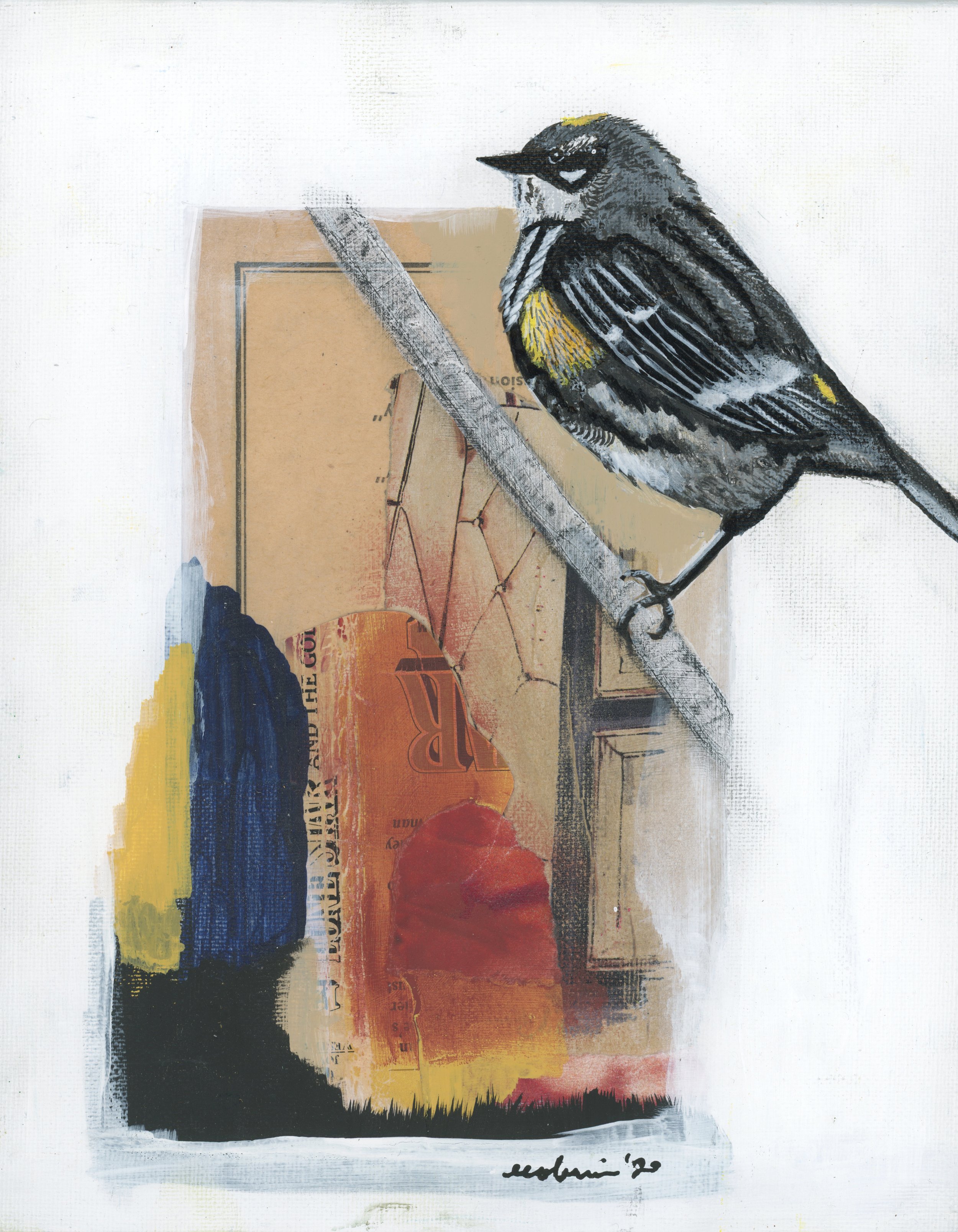
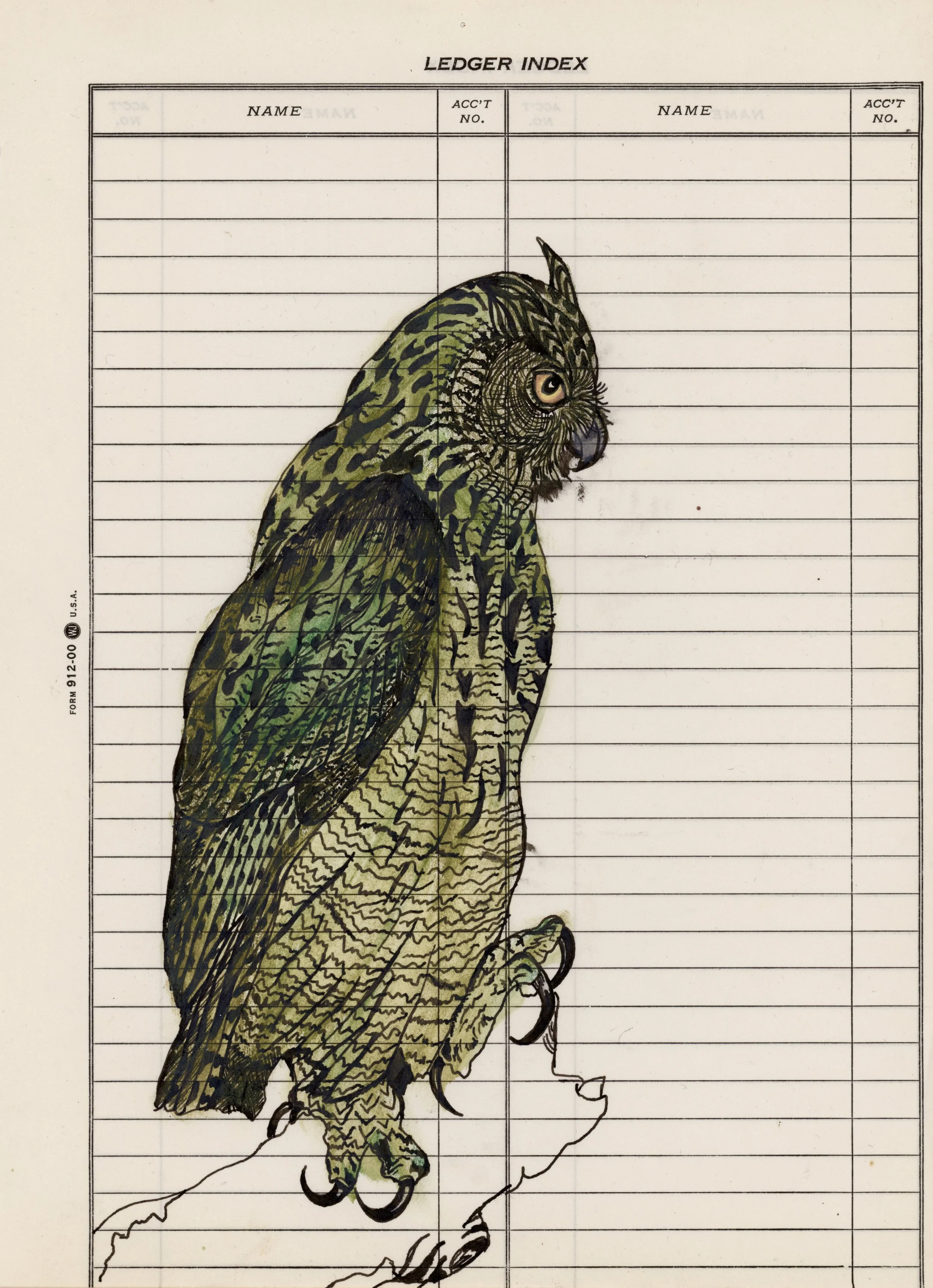
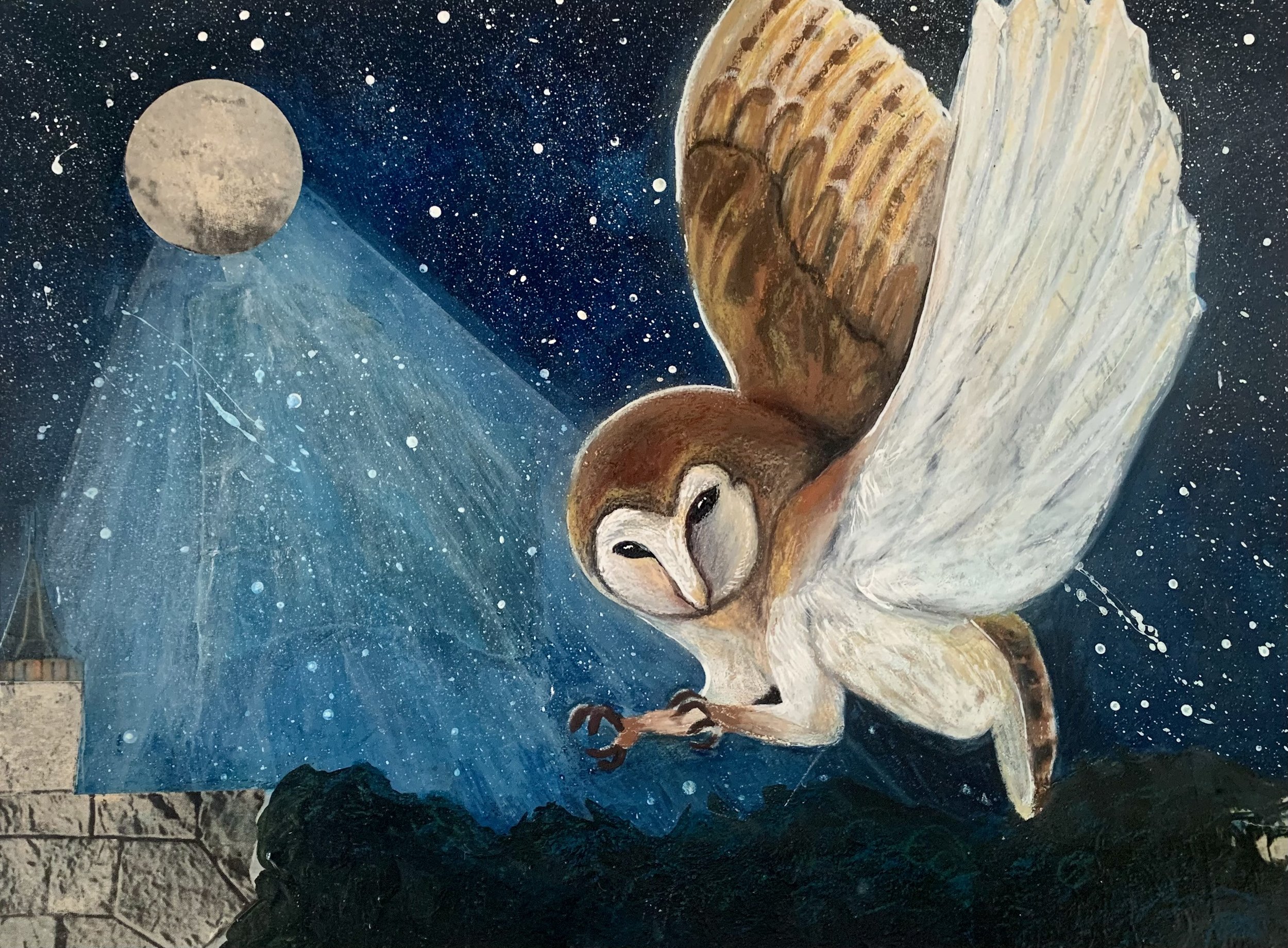
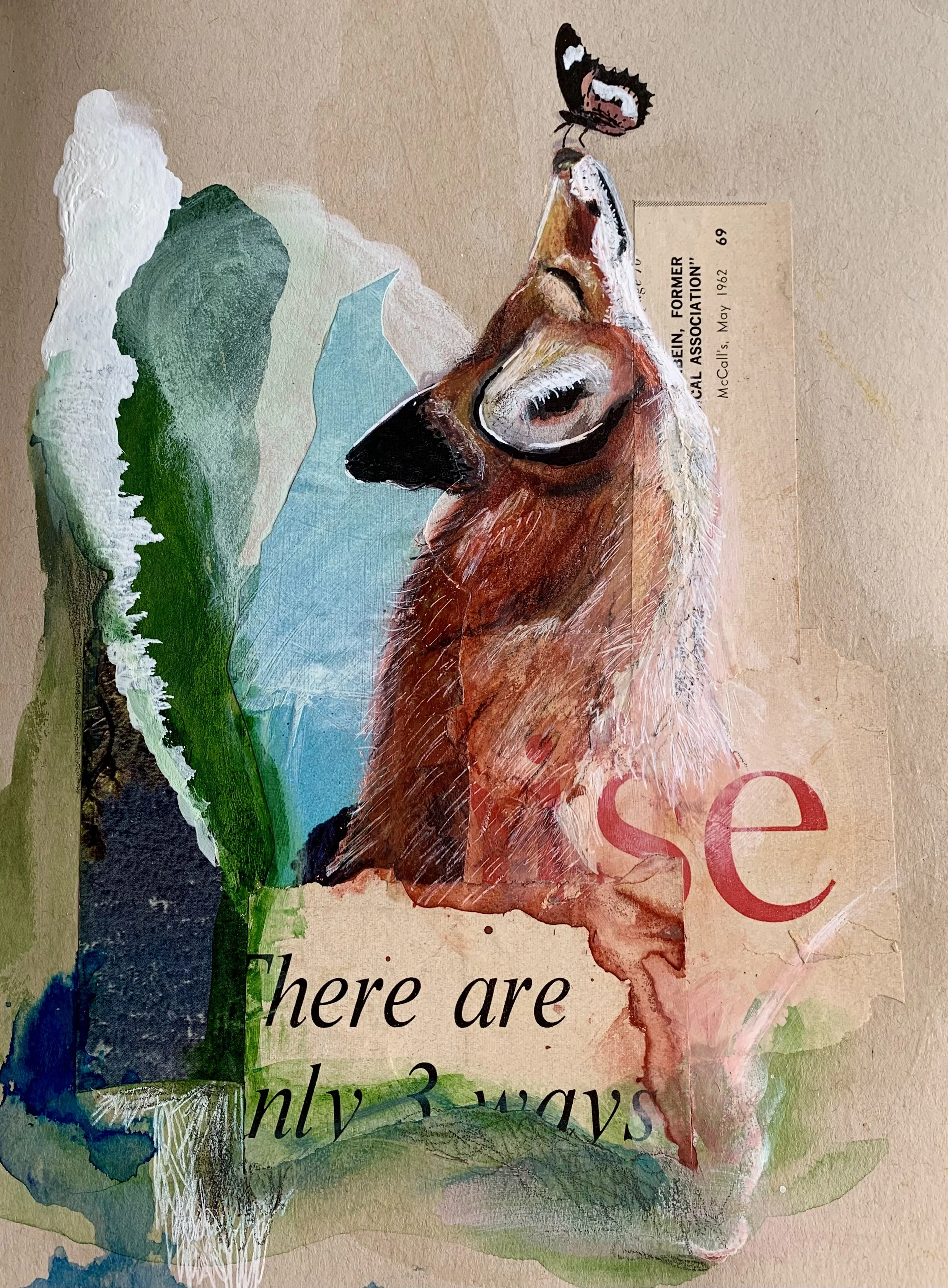
It wasn’t death that drew me to that image, or the several other drawings and etchings of dead birds I made that year. It was being able to see the exquisite lines and patterns that came together to create this dynamic animal; seeing the artwork of their bodies no longer in flight. Since that first drawing, birds and other winged creatures became a motif in my work that appeared over and over again (live ones this time). Over time, they began to take on a symbolic presence, as messengers, as heralds, as companions, or even advisors. Their wild freedom soaring in the sky beneath floating clouds speaks to me as an air sign. The deep intelligence in their eyes intrigues me as a fellow intellectual.
Often, this is how artists build a language of symbols—organically, even haphazardly. They accumulate like seeds in a fledgling forest, growing when tended or withering away with neglect. I, for one, have not sat down to create a visual dictionary of imagery I intend to use in my work (only after the fact). Some ideas take root without needing explanation, others are an obvious reflection of who I am and the life I have lived. Even abstract artists build a vocabulary of gestures and marks in this way; as if these shapes and images continually seek us out.
Childhood Gardens and Tropical Roots
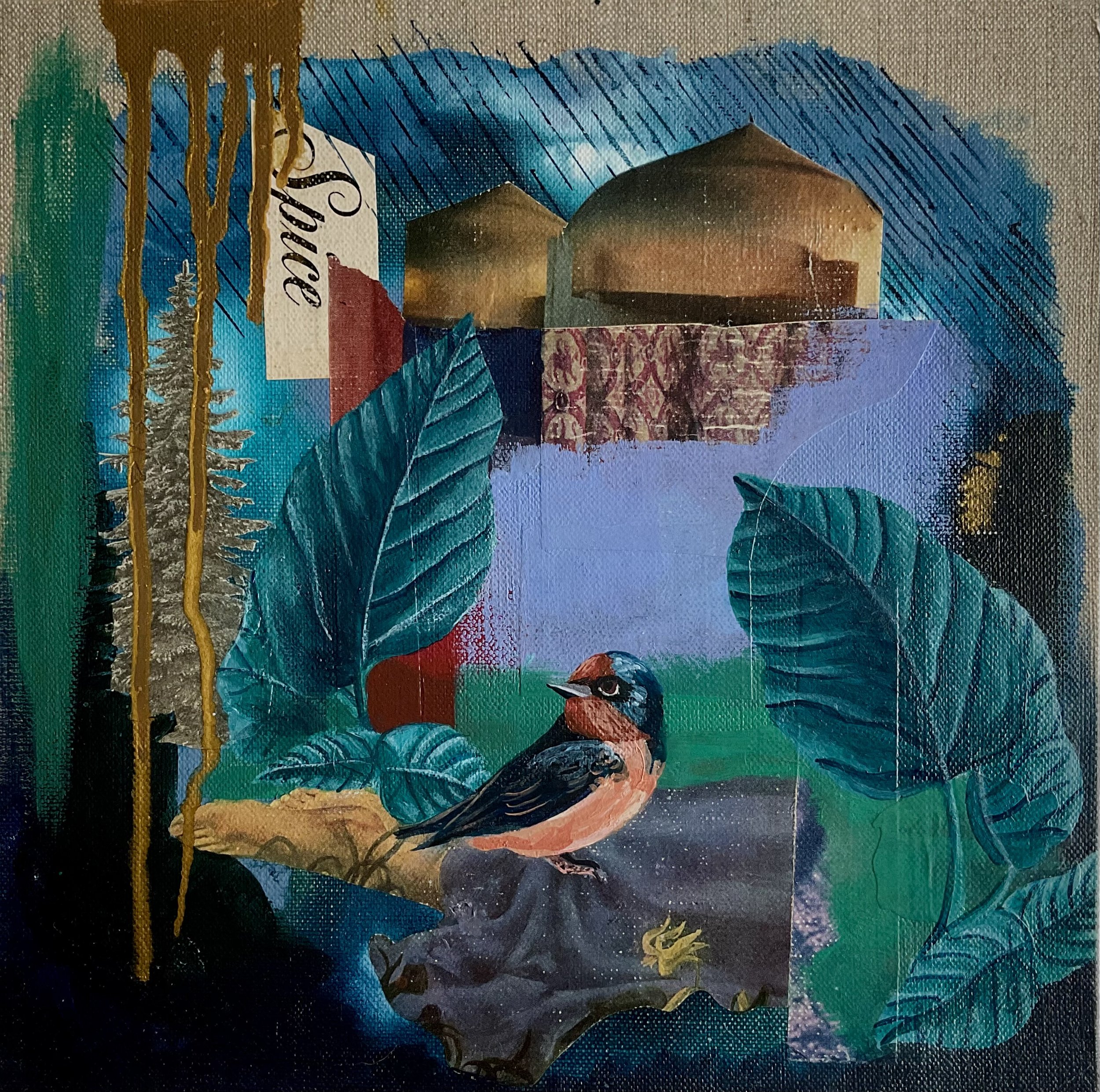
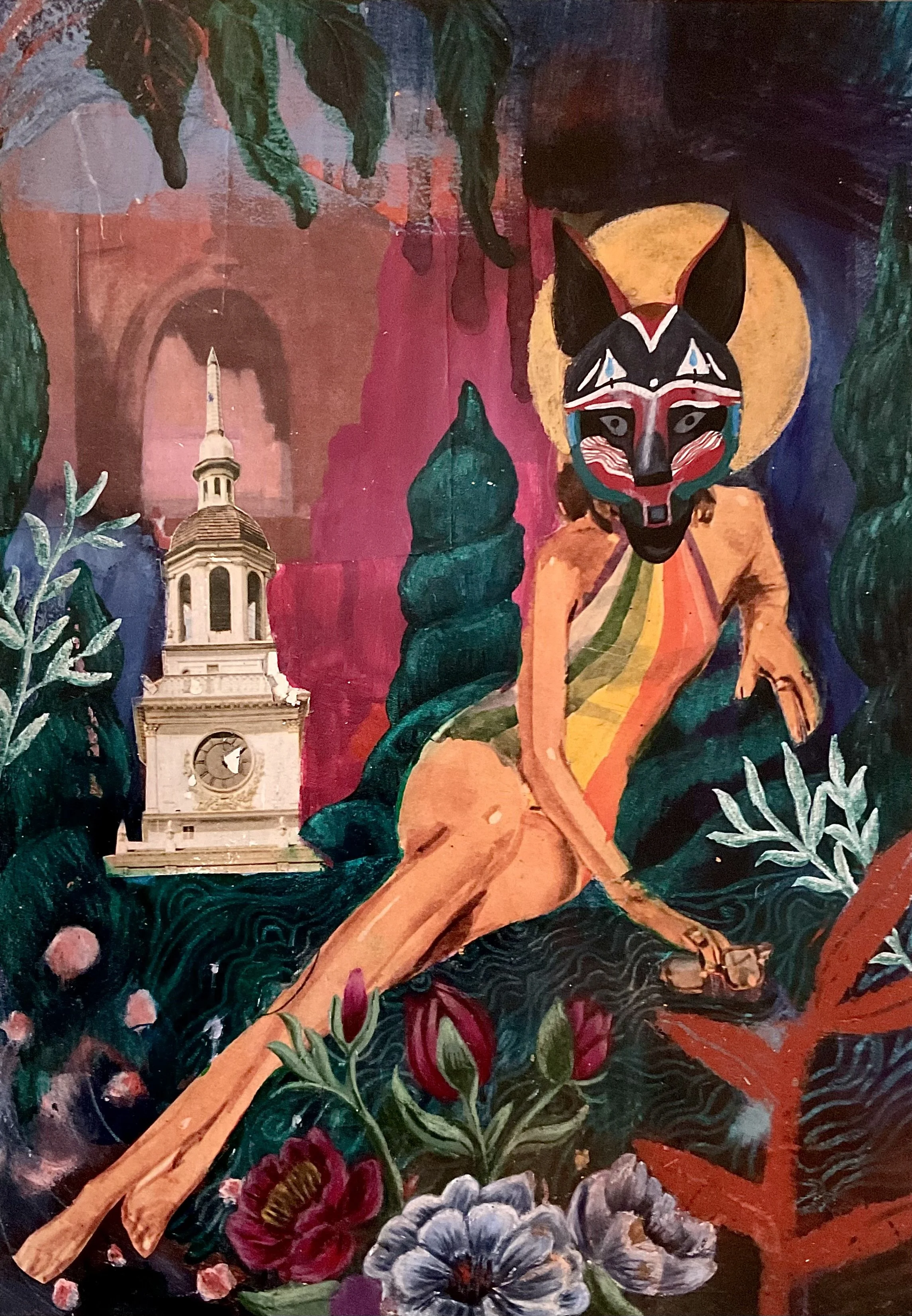
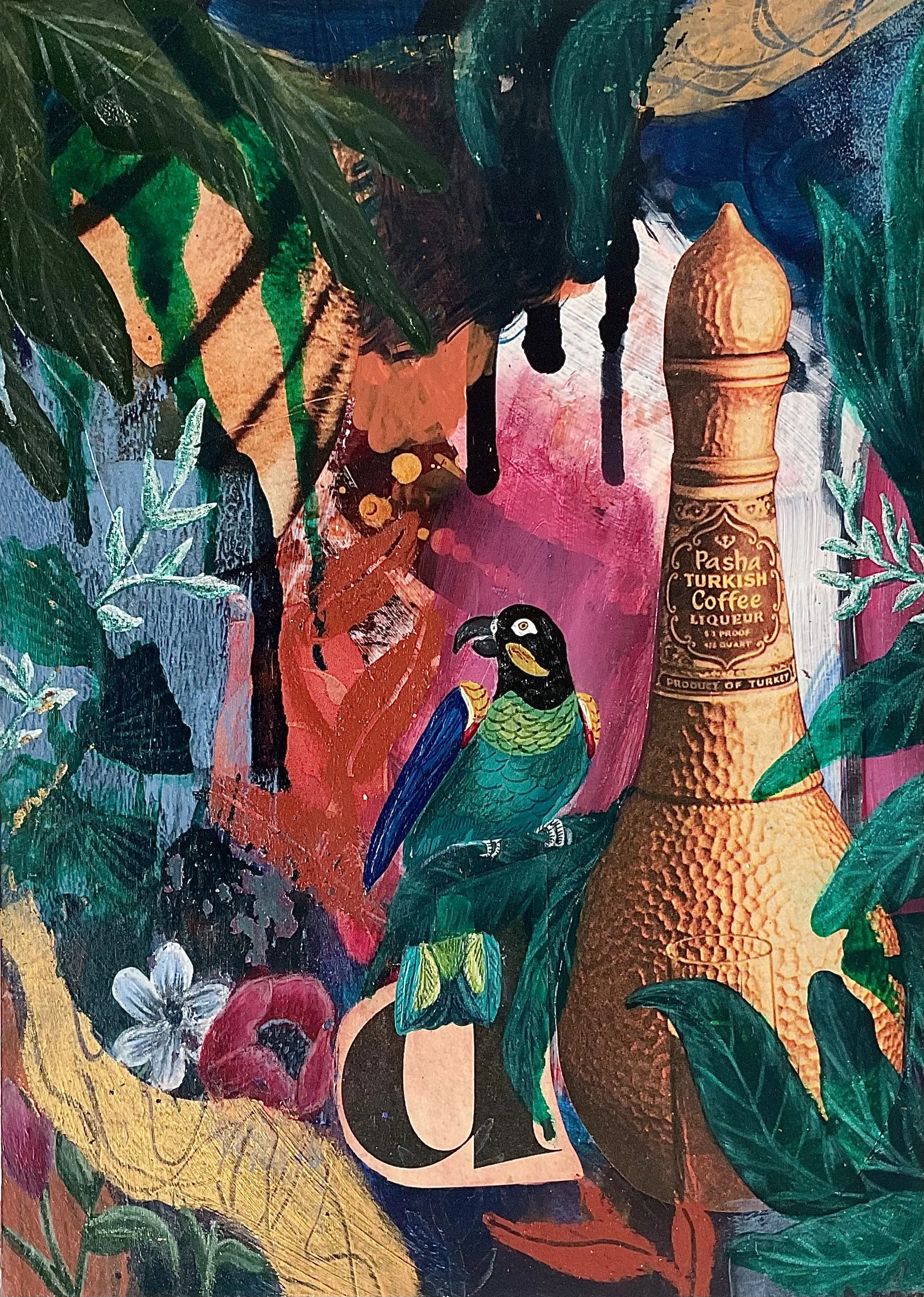
I had a turning point a year or two ago when I realized that the work that felt like the truest expression of myself was the lushest. Jewel-toned images of jungles, forests, and night gardens populate my best pieces. That lushness creates a sense of mystery and wonder, but also a cocoon of safety. The juxtaposition of comforting nostalgia and magical unknown is at the core of my work. The stories that shaped my inner world as a child—Beauty and the Beast, The Secret Garden, The Wind in the Willows—played a part in illustrating my imagination with intricate botanicals, rich florals, and leafy bowers.
Those childhood imaginary gardens matured and evolved as I grew. The first time I rode on the twisting roads that cut through the jungles of Venezuela, my father’s birthplace, there was an unmistakable sense of homecoming. The dense green trees and opulent leaves almost felt familiar. My fairytale forest daydreams took on a more tropical flavor when I embraced my ancestry, further deepening my artistic landscape.
Sinuous Lines, Collage, and Night Scenes
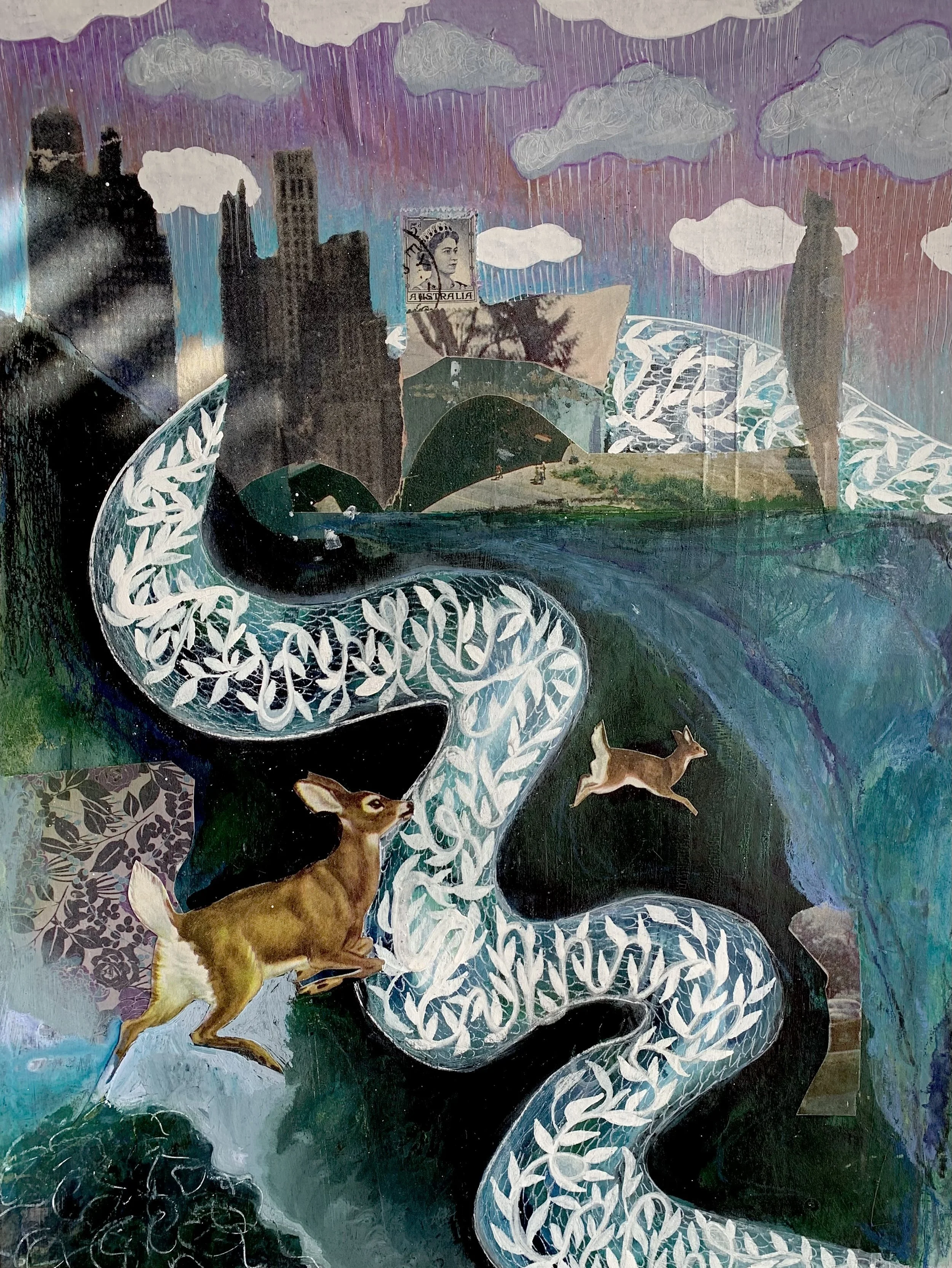
In those jungles, real and imagined, my eye was always drawn to the winding shapes that flowed through and around. The curve of a vine, the bend of a river, the serpentine tangle of roots all echoed something in me. That sinuous language found its way into my art long before I knew I was speaking it. Curved lines, snakes, threads, pathways, and arching leaves quietly weave through my work, often without conscious thought. To me they communicate an invitation to adventure, a journey to be undertaken, a possibility to be realized, a guide to be followed.
These shapes and layers, both literal and abstract, carry a sense of mystery and intimacy that I’ve always been drawn to. Over time, I realized that the darkness—the deep blues, greens, and shadowed tones that often surround these forms in my work—is more than an aesthetic choice. Night itself has become a symbol: a space where the familiar and the unknown meet, where details glow, and where the language of shapes, threads, and motifs can truly breathe.
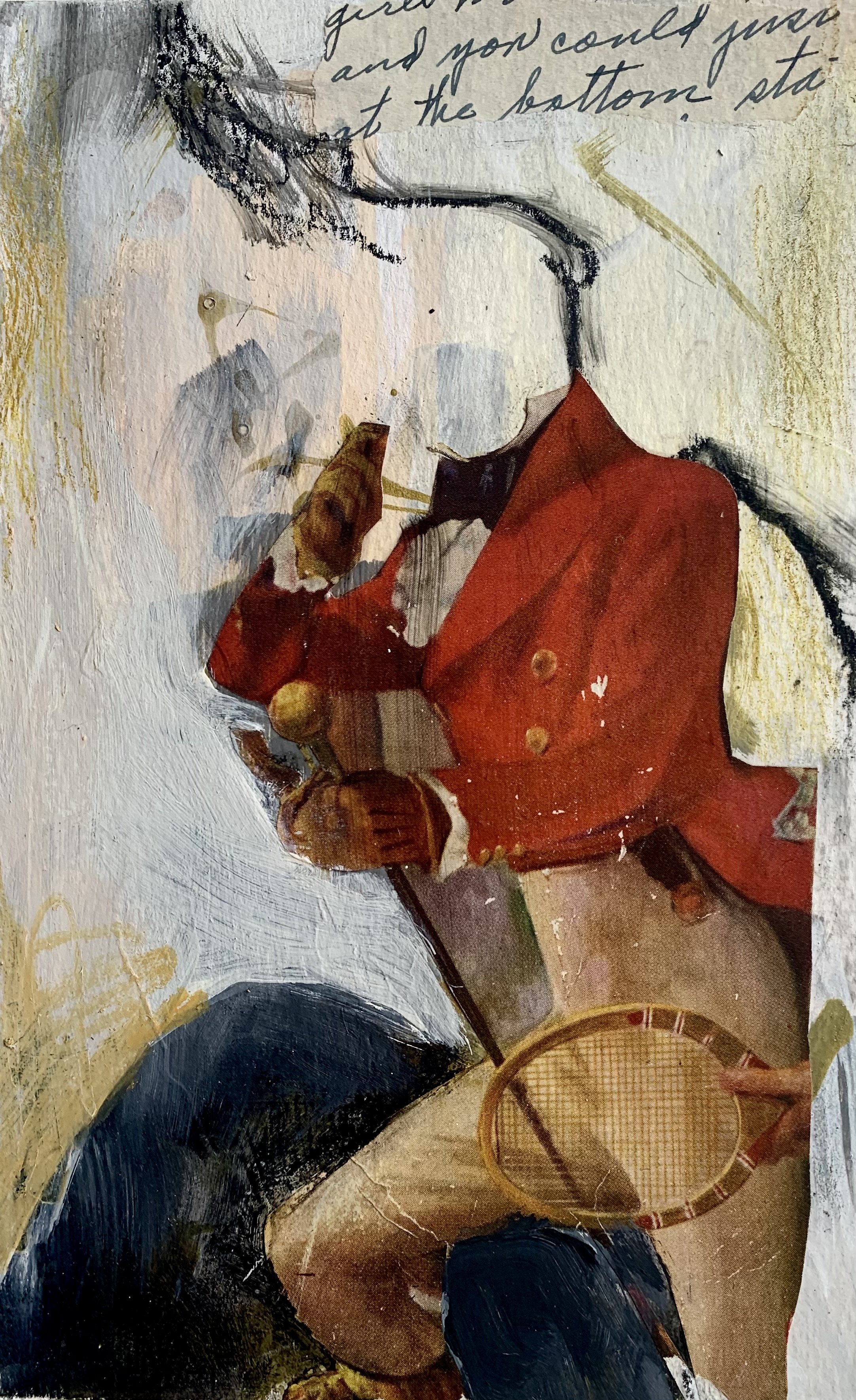
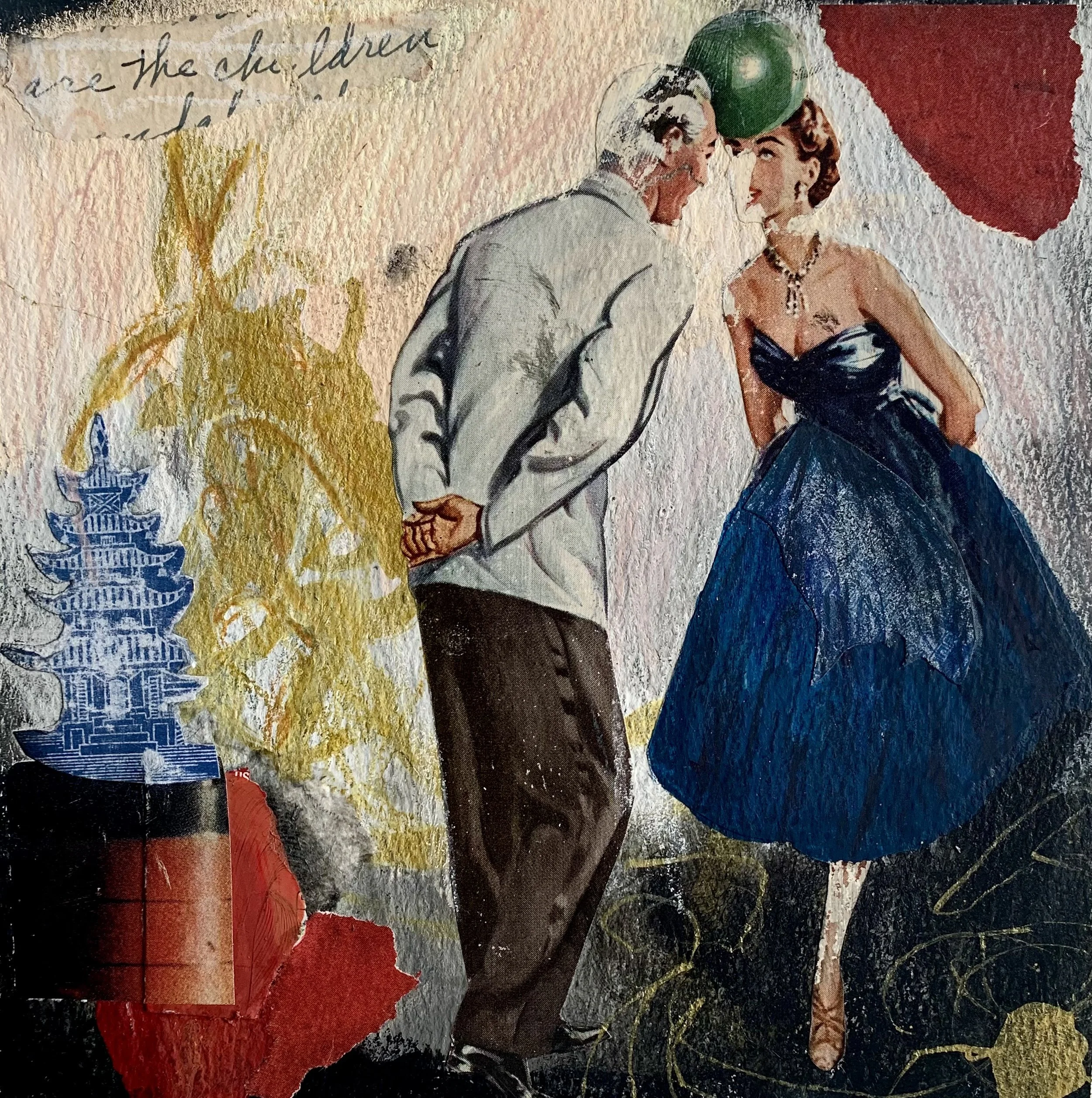
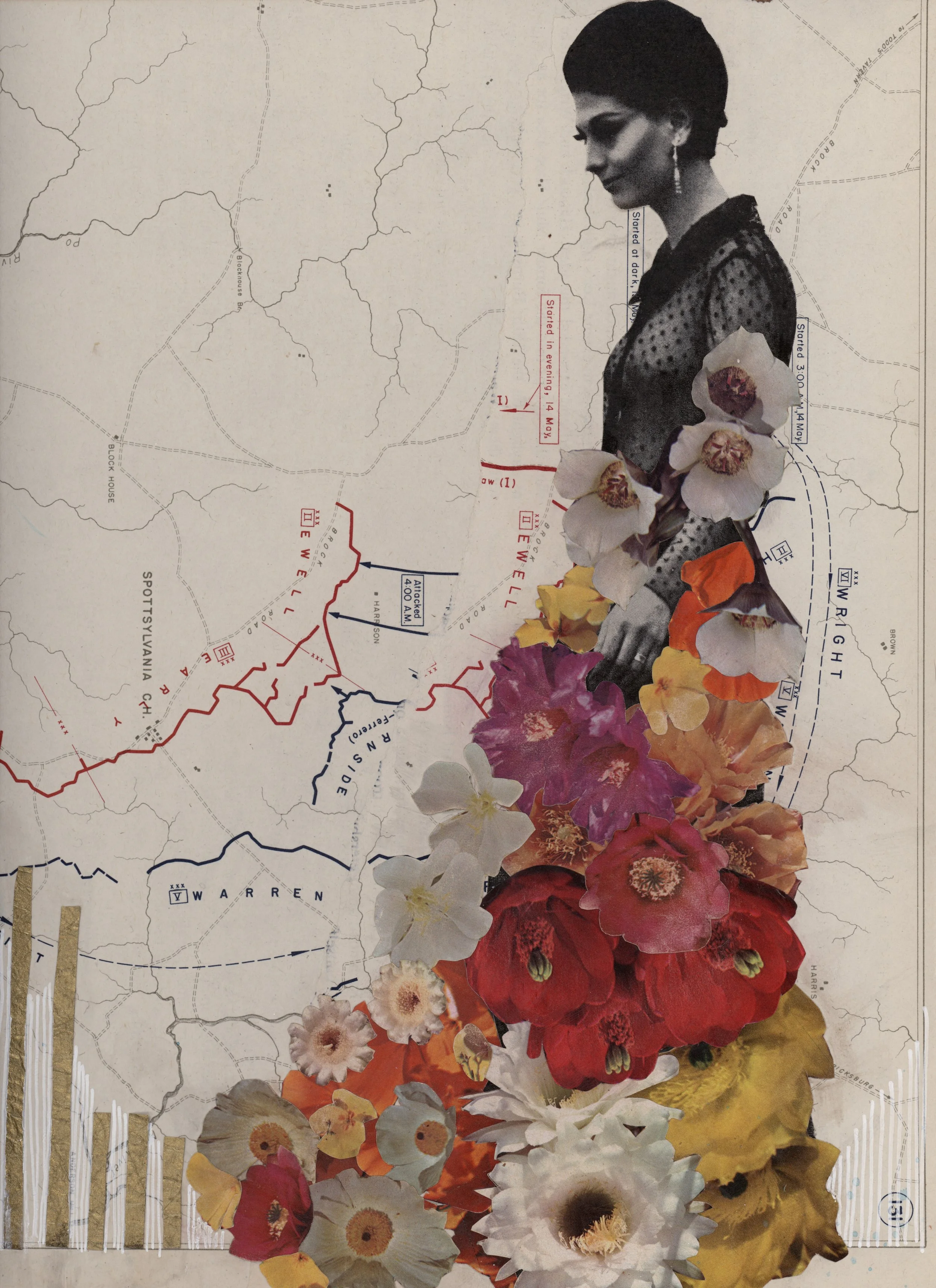
Alongside those recurring shapes and symbols, collage has always been another instinctual gesture in my practice; a way of layering memory, texture, and the sense of many worlds pressed together. Even when I’m not literally cutting and pasting, the spirit of collage is there in the gathering of fragments, and the stitching of disparate influences into a single story.
The Influence of Home
I spent a number of my early years living in my mother’s childhood home, built by her parents in the late 1940s. It was a Mid Century modern split-level dream, filled with books, warm natural textures, golden light, and a veritable museum of knickknacks from around the world. (My grandfather worked in the international department of our local university for many years.) It was my job, every Saturday, to dust the long line of built-in shelves spanning the back wall of the living room where most of these objects lived. So much of my artistic language comes from that house, and those shelves—paper yellowed with age, bronze starbursts, elegant Japanese dolls with vibrant kimono, olive wood wine glasses, marble chess pieces, driftwood, gilded plates, and hand-painted lacquered boxes with delicate clasps.
The memories of my grandparents’ house and the three acres of tree-filled land surrounding it live on in the motifs I return to again and again. Curved leaves, winding paths, birds, exotic patterns and the layered richness of collage all carry the imprint of that childhood world, shaping a symbolic language that flows through my work, whether consciously planned or discovered along the way.
A New Symbol: The Heartroot Flame
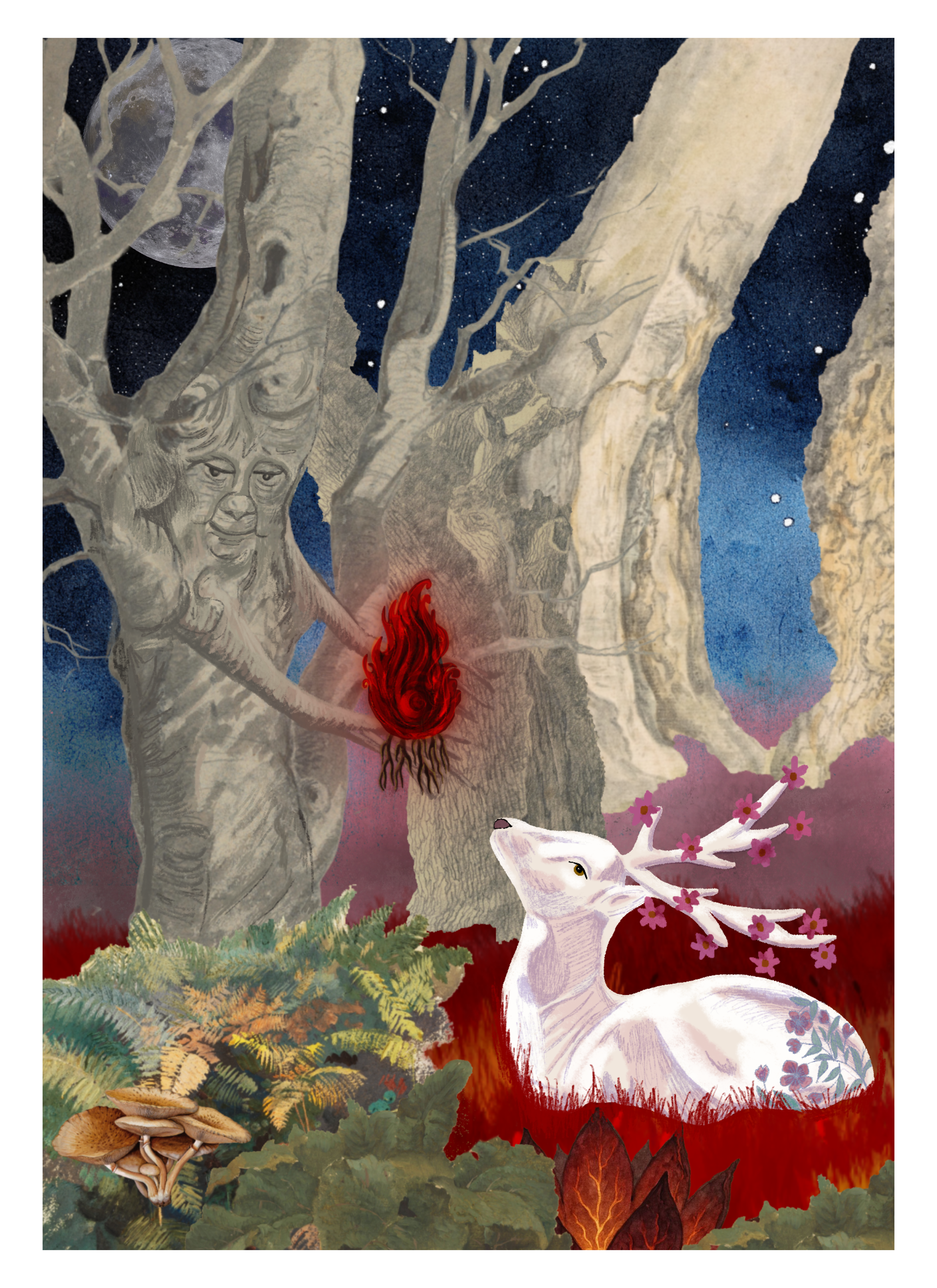
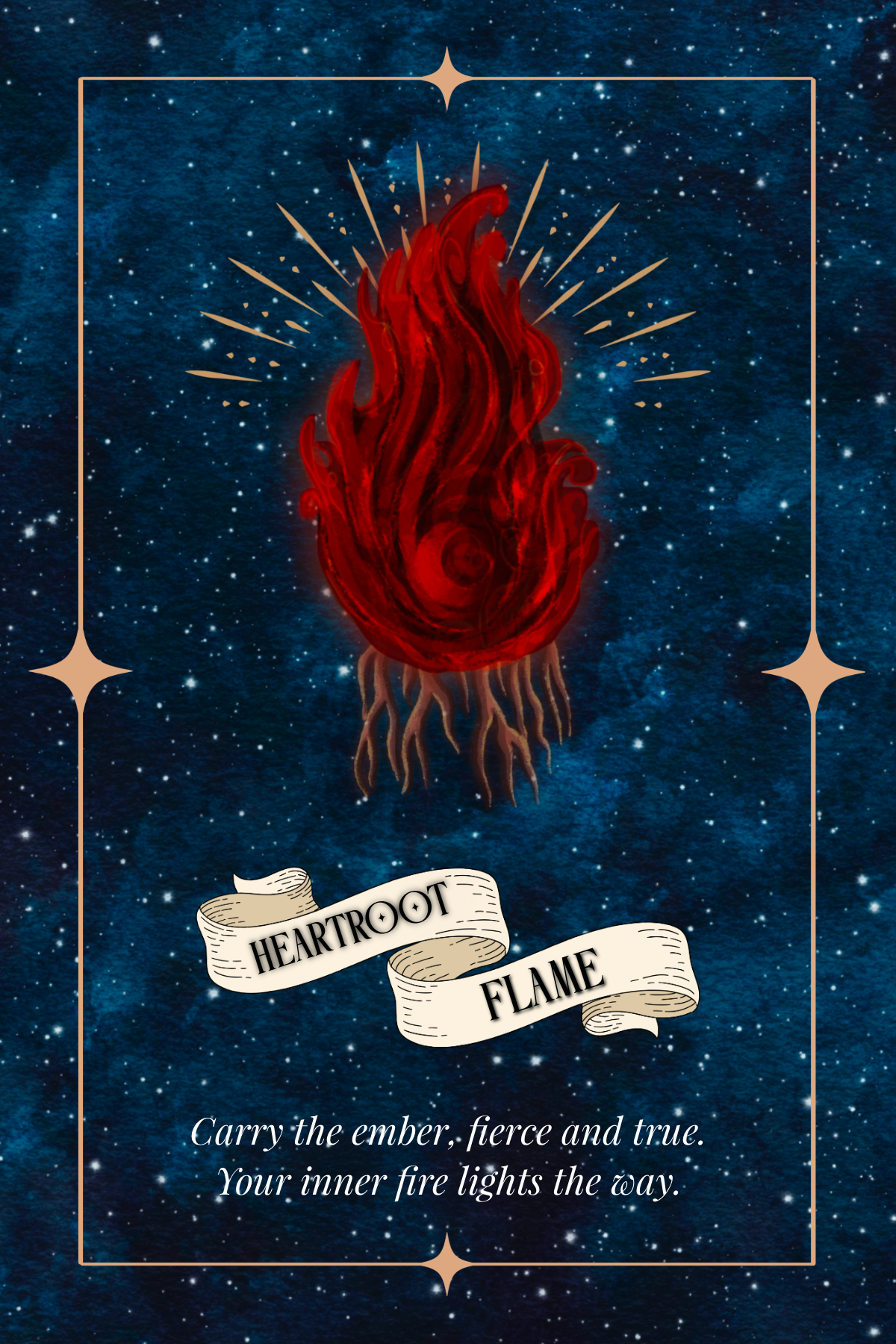
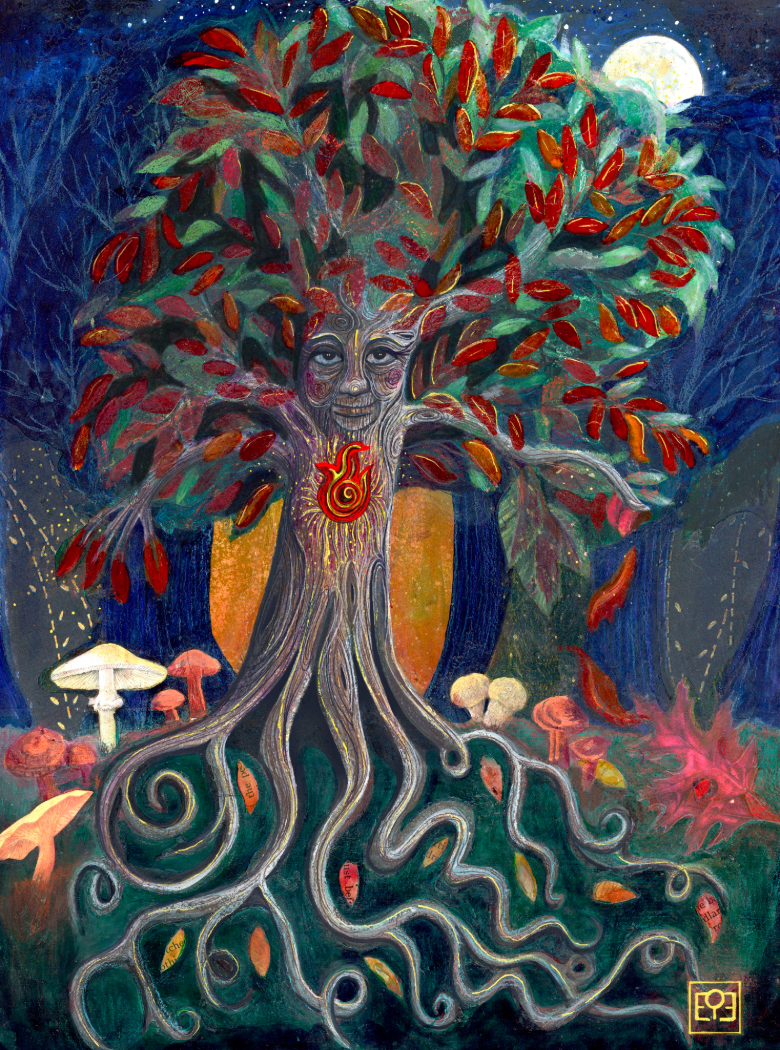
Among the symbols that thread through my work, a new presence has appeared in my latest collection: the Heartroot Flame. Unlike the birds, vines, and winding shapes that have developed naturally, this glowing ember represents a different kind of energy—a quiet, inner light that connects the worlds I build on paper to the personal stories and emotions I carry. It has quickly become a touchstone in my art, a symbol of growth, renewal, and courage.
A Language That Grows
Looking back, it’s clear that my work has always been a conversation with myself—a language of symbols, shapes, and textures that grows and evolves over time. Birds, winding vines, threads, shadowed spaces, and the glow of the Heartroot Flame all play a part in this ongoing dialogue, translating memory, imagination, and emotion into forms that can be seen and felt. Each piece carries these echoes, inviting viewers to wander through the worlds I create, to discover their own stories within the curves, layers, and hidden details, and to linger in the spaces where the familiar and the unknown meet. In the shapes that return again and again, I find both a map of my past and a path forward—an invitation to keep exploring, creating, and discovering the quiet magic that lives just beneath the surface of everyday life.